
 Oct
05
Oct
05
Why Is My Grout Different Colors in Different Parts of the Room?
- October 5, 2026
- 0 Comment(s)
You clean the floor. You step back, and somehow the grout still looks like it belongs to three different houses.
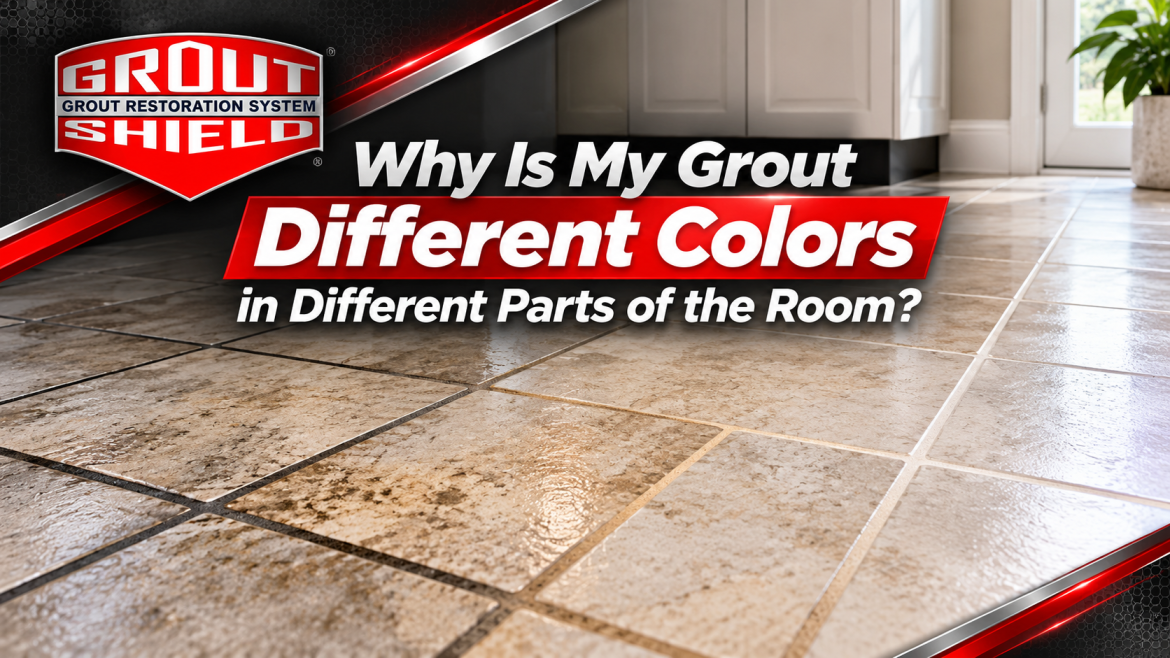
One section looks light and fresh. Another looks darker. A few lines may have a yellow, gray, or almost brown cast even though the grout was originally installed as the same color throughout the room. Uneven grout color is incredibly common, especially in older tile floors, kitchens, bathrooms, entryways, and other high-traffic areas.
The first reason is usually pretty simple: grout is porous. Over time, it can absorb dirt, grease, cleaning products, moisture, spills, and whatever else life throws at the floor. Areas near sinks, stoves, showers, doors, pet bowls, or frequently used walkways tend to discolor faster because they simply get exposed to more grime and moisture.
Cleaning can create another layer of inconsistency. Some areas may have been scrubbed more aggressively than others, while certain cleaners can leave residue behind or affect the grout differently depending on how long they sit. If one section was cleaned with bleach, another with a household spray, and another with a steam cleaner over the years, the grout may eventually start looking less like one continuous color and more like a patchwork quilt.
Moisture can also change grout appearance. In bathrooms and other damp areas, grout may darken where it absorbs water more frequently. If the darker color remains long after the surface has dried, that may point to deeper staining, trapped residue, or another moisture-related issue that deserves a closer look.
Older grout can also fade unevenly simply because some areas get more sunlight, traffic, mopping, or wear. Repairs can add another obvious mismatch. If sections of grout were patched years later, even a “matching” grout color may not blend perfectly with the older material around it.
The good news is that uneven grout color does not automatically mean you need to tear everything out and start over. If the grout is structurally sound, deep cleaning followed by a professional-quality Grout Shield Color Seal can help create a more consistent appearance while also sealing the grout against future staining.
Color Seal is available in a wide range of shades, so you can restore the original grout color or change it completely without replacing the tile. Proper preparation matters, especially if the grout has already been sealed or contains years of buildup. Sometimes the tile is still perfectly good. The grout has simply spent years collecting evidence. A little restoration can make the entire room look dramatically cleaner, newer, and more consistent without the mess and expense of replacing everything.