
 Nov
22
Professional Grade Grout Sealer: A Buyer’s Guide
- November 22, 2026
- 0 Comment(s)
Table of Contents
- What Is Professional Grade Grout Sealer?
- Penetrating vs. Topical Sealers: Which Type Works Best
- How to Apply Professional Grout Sealer Correctly
- How Long Does Professional Grout Sealer Last?
- Grout Sealer Application Tools You’ll Need
- Comparing Solutions: Uzin vs. NuGrout for Contractors
- Key Factors When Choosing a Professional Grade Grout Sealer
- Frequently Asked Questions
Last Updated: September 21, 2026
What Is Professional Grade Grout Sealer?
Professional grade grout sealer is a protective coating applied to grout lines between tiles to prevent staining, moisture penetration, and bacterial growth. Unlike consumer-grade products, professional-grade formulations offer deeper penetration into the porous cement-based grout structure, providing longer-lasting protection and superior stain resistance.
Professional grade grout sealer works by creating either a penetrating barrier that absorbs into the grout or a topical layer that sits on the surface, depending on the sealer type you choose.
Professional formulations handle heavy foot traffic, moisture exposure, and harsh cleaning agents without degrading quickly, maintaining protection for years rather than months.
Penetrating vs. Topical Sealers: Which Type Works Best
Penetrating sealers absorb into the grout’s porous structure, creating a hydrophobic barrier without changing appearance. They excel at preventing oil-based stains and moisture penetration while allowing the grout to breathe.
Topical sealers sit on the surface, providing enhanced stain resistance and color enhancement, but require more frequent reapplication than penetrating options.
For most homeowners, penetrating sealers offer the best long-term value because they won’t peel or wear through high-traffic areas, despite requiring more careful application.
How to Apply Professional Grout Sealer Correctly
Proper application determines success. Surface preparation is non-negotiable; dirty or wet grout won’t accept sealer properly.
Surface Preparation
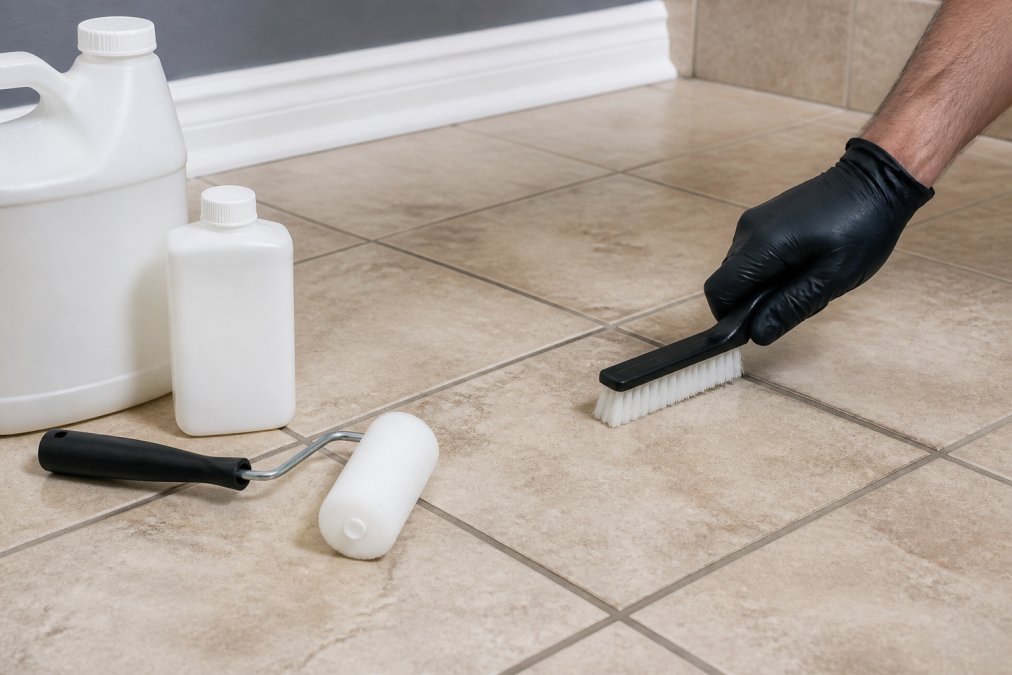
Deep clean grout lines with a stiff brush and appropriate cleaner, removing all dirt, mold, mildew, and soap residue. Allow grout to dry completely, typically 48-72 hours, before sealing, as wet grout traps moisture beneath the sealer.
Application Technique
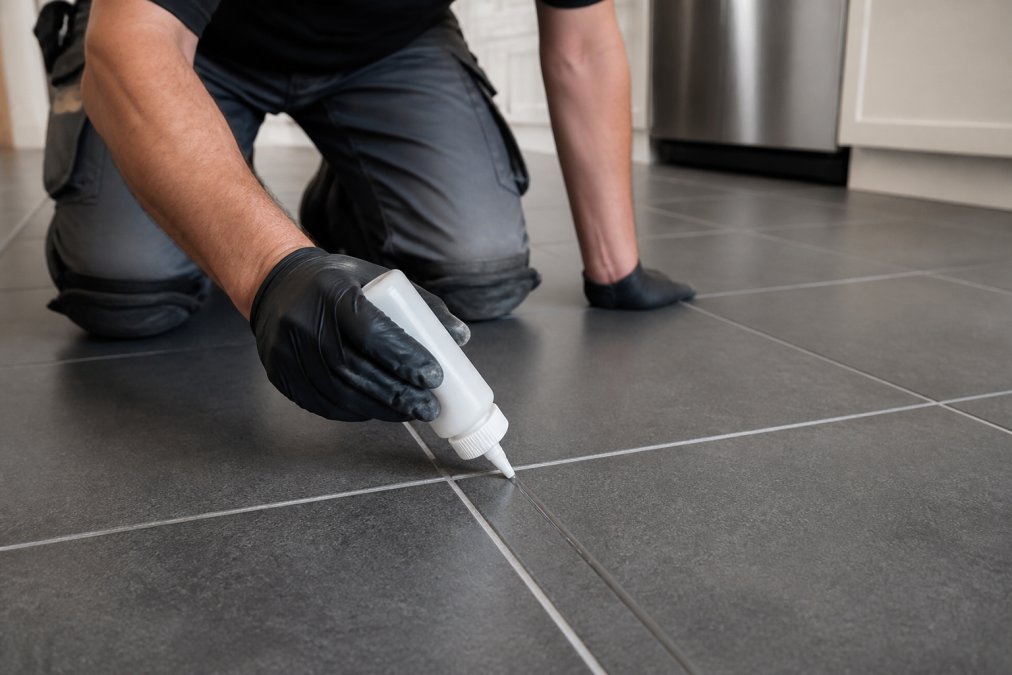
Apply sealer using the specified applicator bottle or brush, working slowly along grout lines. Penetrating sealers need thorough saturation; topical sealers require even coverage without puddling.
Apply penetrating sealers in thin passes to ensure full absorption. For topical sealers, use steady strokes to avoid drips. Painter’s tape on tile edges prevents accidental overflow.
Avoid water contact during curing (24-48 hours). Premature water exposure is the leading cause of sealer failure.
Common Application Errors and How to Fix Them
Haze on tile surfaces occurs when sealer oversaturates and wicks onto adjacent tile. Wipe wet haze immediately with a damp cloth; for dried haze, use pH-neutral cleaner. Prevention: apply conservatively and wipe excess as you work.
Uneven coverage indicates incomplete saturation. If noticed after curing, light sanding followed by a second application will even out protection.
Pooling indicates oversaturation and may cause peeling. Absorb excess immediately during application; reduce sealer per pass for future applications.
Tacky sealer after 48 hours signals insufficient ventilation or damp grout. Ensure windows and fans run during and after application. In humid climates, apply during dry seasons or use a dehumidifier.
Applying sealer to wet grout is the most common mistake. Water trapped beneath the sealer creates mold growth and causes the protective barrier to fail within months. Always wait 48-72 hours after cleaning before sealing.
Deep clean grout lines before sealing; dirt trapped beneath the sealer prevents proper adhesion and causes premature failure. Most application problems stem from skipping this step. Use a grout brush with stiff bristles, ordinary toothbrushes leave debris behind.
How Long Does Professional Grout Sealer Last?
The longevity of professional-grade grout sealer depends on sealer type, application quality, foot traffic, moisture exposure, and maintenance habits. This is where professional-grade products genuinely outperform budget alternatives, and where understanding re-application frequency becomes essential for long-term cost planning.
Durability by Room Type and Usage Pattern
Well-applied penetrating sealers typically last 3-5 years in residential bathrooms with moderate use (one to two occupants, standard shower frequency). In master bathrooms with heavy daily use or multiple occupants, expect 2-3 years before re-sealing becomes necessary. Kitchen grout, exposed to constant moisture, spills, and acidic cleaners, requires re-sealing every 2-3 years even with professional-grade penetrating sealers. Grout in entryways or mudrooms, subject to heavy foot traffic but lower moisture, often lasts 4-5 years.
Place An Order Online or Call 1-800-631-0716 →
Topical sealers, which sit on the surface rather than absorbing, typically last 1-3 years depending on traffic and cleaning intensity. High-traffic commercial applications, restaurants, retail spaces, public restrooms, require re-sealing annually or every 18 months regardless of sealer type, because foot traffic and frequent cleaning degrade the protective barrier faster than residential use.
Outdoor grout sealed with professional-grade products lasts 2-3 years in temperate climates and 1-2 years in regions with freeze-thaw cycles, where moisture penetration and expansion cause accelerated degradation. Covered outdoor spaces (patios under eaves, covered porches) extend sealer life by 1-2 years compared to fully exposed installations.
Tile Type and Grout Compatibility
The type of grout and tile also influences re-application timing. Epoxy grout, which is less porous than cement-based grout, holds sealer longer, often 5-7 years in residential bathrooms, because the sealer sits on a denser surface. Unsanded grout, common in bathrooms with narrow grout lines, accepts penetrating sealer more readily and maintains protection for the full 3-5 year window. Sanded grout, used in kitchens and larger-format tiles, has larger pores that allow deeper sealer penetration but also expose more surface area to wear, sometimes reducing effective durability by 6-12 months.
Natural stone tiles (marble, limestone, slate) require specialized sealers and re-application every 1-2 years because acidic cleaners and mineral-rich water degrade both grout and stone simultaneously. Ceramic and porcelain tiles, being non-porous, don’t affect sealer longevity, the grout itself is the limiting factor.
Signs That Re-Sealing Is Needed
Watch for these specific indicators that the protective barrier has degraded:
- Water beading behavior changes. When water no longer beads up on grout lines and instead soaks in immediately, the hydrophobic barrier has failed. Test this by pouring a small amount of water on the grout; if it absorbs within seconds rather than beading, re-sealing is overdue.
- Visible staining that doesn’t clean away. New stains that resist normal cleaning indicate the grout is no longer protected. This is especially noticeable in kitchens where oil or wine spills leave permanent marks.
- Grout texture becomes rough and porous. Run your finger along the grout line; if it feels rough and chalky rather than smooth, the sealer has worn away.
- Mold or mildew growth despite regular cleaning. Recurring mold in bathrooms signals that moisture is penetrating the grout, a sign the sealer’s hydrophobic properties have degraded.
- Grout color darkening or appearing damp. Grout that looks darker or perpetually damp, especially in bathrooms, indicates water absorption, a clear sign re-sealing is necessary.
Cost-Effectiveness Over Time
The real question isn’t just how long it lasts; it’s whether professional-grade formulations deliver better value than cheaper alternatives over time. When you factor in labor (whether DIY time or contractor cost), professional-grade options can save money and hassle over time.
For contractors managing multiple projects, tracking re-application schedules by room type and client location prevents warranty callbacks and builds reputation. Homeowners who understand their specific re-application timeline can budget for maintenance and avoid the surprise of suddenly stained, unprotected grout.
Re-seal penetrating sealers every 3-5 years in residential bathrooms, every 2-3 years in kitchens, and annually in commercial spaces. Topical sealers require more frequent re-application (1-3 years). Monitor water beading behavior and grout texture to catch degradation early.
Grout Sealer Application Tools You’ll Need
Success depends partly on using the right tools. Most professional-grade sealers come with an applicator bottle designed for precise application, but having backup tools prevents mistakes and saves time.
Essential tools for application:
- Applicator bottle (typically included with professional-grade sealers)
- Stiff-bristled grout brush for cleaning before sealing
- Clean cloths or paper towels for wiping excess sealer
- Painter’s tape to protect tile surfaces from overspray
- Safety equipment: gloves and eye protection
- Adequate ventilation: open windows or use fans to manage fumes
Optional but helpful tools include a grout sealer pump sprayer for faster coverage on large areas, and a small angled brush for precise application in corners. Quality applicator bottles make the difference between neat, controlled application and messy overflow onto tile surfaces.
Many homeowners underestimate the importance of surface preparation tools. A quality grout brush removes debris that an ordinary toothbrush misses. This single tool prevents sealer failure by ensuring the grout is truly clean before application begins.
Comparing Solutions: Uzin vs. NuGrout for Contractors
Contractors need sealers that balance performance with application speed and durability. Both established brands and emerging solutions compete in this space, each with different strengths for professional use.
When evaluating professional-grade options, consider application speed, curing time, durability, and cost-effectiveness on larger projects.
Key Factors When Choosing a Professional Grade Grout Sealer
Several critical factors should guide your selection beyond brand reputation alone.
| Sealer Type | Best For | Durability | Appearance | Curing Time |
|---|---|---|---|---|
| Penetrating | Most residential applications | 3-5 years | Natural finish | 24-48 hours |
| Topical | Color enhancement needed | 1-3 years | Enhanced look | 24-48 hours |
| Penetrating + Topical | Maximum protection | 4-6 years | Custom appearance | 48-72 hours |
Frequently Asked Questions
What is the difference between penetrating and topical grout sealers?
Penetrating sealers absorb into the grout’s porous surface, creating a hydrophobic barrier from within that repels water and oil-based stains without changing the grout’s appearance. Topical sealers sit on the surface, creating a visible protective layer that offers stronger stain resistance but can yellow over time and requires more frequent reapplication. Penetrating sealers work better for matching your existing grout finish, while topical sealers provide heavier-duty protection for high-traffic areas.
How often should you apply professional-grade grout sealer?
The exact timeline depends on sealer type, application method, and your home’s moisture levels. Professional-grade formulations last longer than consumer-grade products, but regular inspection of grout lines helps you catch wear before stains return.
Can professional grade grout sealer remove existing mold and mildew?
Professional grade grout sealer prevents future mold and mildew by creating a moisture barrier, but it cannot remove existing deep contamination. You must clean and deep-dry grout lines before sealing, mold trapped beneath a sealer will continue to grow. Use a grout cleaner and allow proper drying time before application. If mold has penetrated deeply, professional cleaning may be necessary before sealing for best results.
Is professional grade grout sealer safe for homes with children and pets?
Many professional-grade sealers are water-based and VOC-free, making them safer for households with children and pets once fully cured. Always check the product’s safety certification and allow the recommended curing time before allowing foot traffic or pet contact. Environmentally friendly formulations reduce chemical exposure while maintaining durability and stain resistance. Review the manufacturer’s safety data and follow application guidelines for your specific sealer.