
 Nov
23
Does Grout Sealer Prevent Staining? What It Does and Doesn’t Stop
- November 23, 2026
- 0 Comment(s)
Quick Summary
A grout sealer does not prevent staining, but it slows how fast liquids soak into porous grout. This buys time to wipe up spills before they set. Penetrating sealers suit most cement grout, while sealing does not replace prompt cleanup.
- Grout stains because its pores absorb spills, oils, soap scum and hard water.
- A penetrating grout sealer soaks into pores and keeps the grout’s natural color and texture.
- Do the water-drop test: if water soaks in within minutes, the grout likely benefits from sealing.
- Epoxy grout is non-porous and generally does not need a sealer for stain protection.
- Blot spills within a few minutes, since an hour or more can stain even sealed grout.
Table of Contents
- Does Grout Need to Be Sealed in a Shower?
- How Penetrating Grout Sealer Works
- How Much Staining Protection Sealer Actually Provides
- How to Seal Grout Correctly
- How Long Grout Sealer Lasts and When to Reseal
- Myths vs. Facts About Grout Sealer and Stains
- Booking a Professional Grout Restoration or Choosing Your Sealer
- Frequently Asked Questions
Why Grout Stains in the First Place
Grout stains because it is porous.
Most stains come from everyday sources. Kitchen grease, cooking oils, coffee, wine, tomato sauce and cleaning products all cause trouble.
Grout also changes color as it ages. Years of foot traffic and small acidic spills wear down the top layer.
Sealer is one way to reduce this problem. It does not make grout stain-proof, but it can slow how quickly liquids soak in.
Does Grout Need to Be Sealed in a Shower?
Most shower grout benefits from sealing, but ‘most’ is doing real work in that sentence. Whether yours needs it depends on the grout type, the shower’s moisture behavior, and how the grout was installed.
Start with the grout type
- Cementitious grout (the common sanded or unsanded cement-based grout): porous and absorbent. In a shower it sees soap, shampoo, body oils, and mineral-heavy water daily, and it stays damp longer than floor grout.
- Epoxy grout: non-porous and largely non-absorbent. It does not need a sealer for stain protection, and applying one is usually unnecessary. Check your installation records or the product label before assuming you need to seal.
- Urethane and other low-absorption grouts: read the manufacturer’s instructions. Some accept sealers; others do not need them or specify a particular product type.
If you cannot identify the grout, the water-drop test is the practical tiebreaker.
The water-drop test as a decision tool
Drip a few drops of water onto a clean, dry grout line in an inconspicuous spot. If the water beads and sits on the surface, the grout is already resisting absorption, either it is a low-absorption grout or it still has sealer. If the water darkens the grout and soaks in within a few minutes, the grout is absorbent and will likely benefit from sealing. Repeat the test after cleaning and drying, because dirt and soap film can mask absorption.
Application failure modes to avoid in a shower
Shower sealing goes wrong in predictable ways:
- Sealing damp grout: trapped moisture under a sealer can cause haze, discoloration, or mildew. Let the grout dry fully, often 24 to 72 hours in a humid bathroom, before applying.
- Sealing dirty grout: dirt and soap residue get locked under the sealer. Clean thoroughly and rinse before sealing.
- Skipping the inconspicuous test: apply a small amount in a hidden area first to confirm the product does not darken or haze your specific grout.
- Leaving excess sealer on tile: many penetrating sealers leave a haze if not wiped from the tile face promptly. Wipe with a clean, dry cloth as you go.
- Ignoring ventilation and label directions: sealers off-gas; follow the manufacturer’s ventilation and cure-time instructions, and keep the shower dry for the full cure period.
Watch out: sealing a shower that has active moisture intrusion or a persistently damp pan traps water and can make mildew worse. Fix the moisture source before sealing.
What sealing actually changes in a shower
A sealed shower grout is easier to wipe clean because water beads instead of soaking in, so soap scum has less to grab. That is a maintenance benefit, not a guarantee. Sealer does not replace ventilation, routine cleaning, or prompt attention to soap and mineral buildup. If your grout is epoxy or another low-absorption type, skip the sealer and put the effort into cleaning and ventilation instead.
How Penetrating Grout Sealer Works
A penetrating grout sealer soaks into the pores of the grout and forms a barrier beneath the surface. It does not leave a film on top.
This type of sealer is the most common choice for grout. It keeps the grout’s natural color and texture. It also lets the grout breathe, so moisture trapped beneath the surface can still escape.
The sealer works by reducing absorption. Water and oil bead up on the surface longer, which gives you time to wipe up spills.
Penetrating Sealers Versus Surface Sealers
Penetrating and surface sealers work in different ways, and each has its place.
| Sealer Type | How It Works | Look | Best For |
|---|---|---|---|
| Penetrating | Soaks into pores | Natural, no film | Most cement grout |
| Surface (topical) | Forms a film on top | Can look shiny | Decorative or hard-to-seal grout |
Penetrating sealers suit most homes. Surface sealers can add a glossy look, but they wear off faster and can trap dirt if applied unevenly. Check the product label before you choose.
How Much Staining Protection Sealer Actually Provides
Sealer reduces absorption; it does not make grout stain-proof. The practical question is not whether sealer stops stains but how much cleanup time it buys and which spills still win. A penetrating sealer on cementitious grout can slow liquid penetration, which may make a spill easier to wipe up, but timing still matters: act within minutes rather than hours.
What sealer realistically protects against
- Watery, water-soluble spills (coffee, tea, juice, wine, most food liquids): sealer gives you the best odds here. A sealed line typically beads liquid on the surface long enough to blot it up before it soaks in. Unsealed grout can absorb these within minutes.
- Oily and greasy spills (cooking oil, butter, salad dressing, body oils): protection is partial. Oil has lower surface tension and can migrate into pores even on sealed grout if it sits. Wipe with a degreasing cleaner promptly rather than waiting.
- Pigmented and dye-heavy spills (tomato sauce, turmeric, red wine, food coloring, some cosmetics): these are the highest risk. Sealer slows the dye but does not block it indefinitely; a sealed line left overnight can still take a permanent tint.
- Hard water and soap residue: sealer does not prevent mineral film or soap scum from building up on the surface. It makes the grout easier to wipe, but you still need routine cleaning to avoid a dull haze.
- Mildew and mold: sealer does not kill or prevent biological growth. In a shower, moisture and organic residue still feed mildew; ventilation and cleaning matter more than sealer here.
The cleanup-time rule that matters more than the sealer
A common pattern is that the spill, not the sealer, decides the outcome. Blot liquids within a few minutes and the sealer usually does its job. Let a spill sit for an hour or more and even a freshly sealed line can stain. For oily or pigmented spills, treat the clock as shorter, not longer.
A practical spill protocol:
- Blot, do not scrub, to lift liquid before it spreads along the line.
- Use a pH-neutral cleaner for everyday spills; reserve a degreaser for oils and a mild oxygen bleach for organic stains.
- Rinse and dry the line so residue does not attract dirt.
- If a stain remains after cleaning, the sealer may have been breached at that spot, spot-clean and plan to reseal.
What sealer does not protect against
Sealer cannot stop physical wear. Grout can still crack, crumble, or discolor from age, heavy foot traffic, or acidic cleaners that erode the cement surface. It cannot repair damaged grout or remove mold that has already grown into the surface. And it does not make grout impervious to standing water in a poorly drained shower pan.
Watch out: treating sealer as a substitute for prompt cleanup is the most common way homeowners end up disappointed. The sealer buys time; it does not eliminate the need to use it.
How to Seal Grout Correctly
Proper prep matters more than the sealer itself. Follow these steps for the best results.
- Clean the grout thoroughly with a grout cleaner and a stiff brush.
- Rinse well and let the grout dry for at least 24 to 72 hours.
- Test the grout with a water drop to confirm it is absorbent.
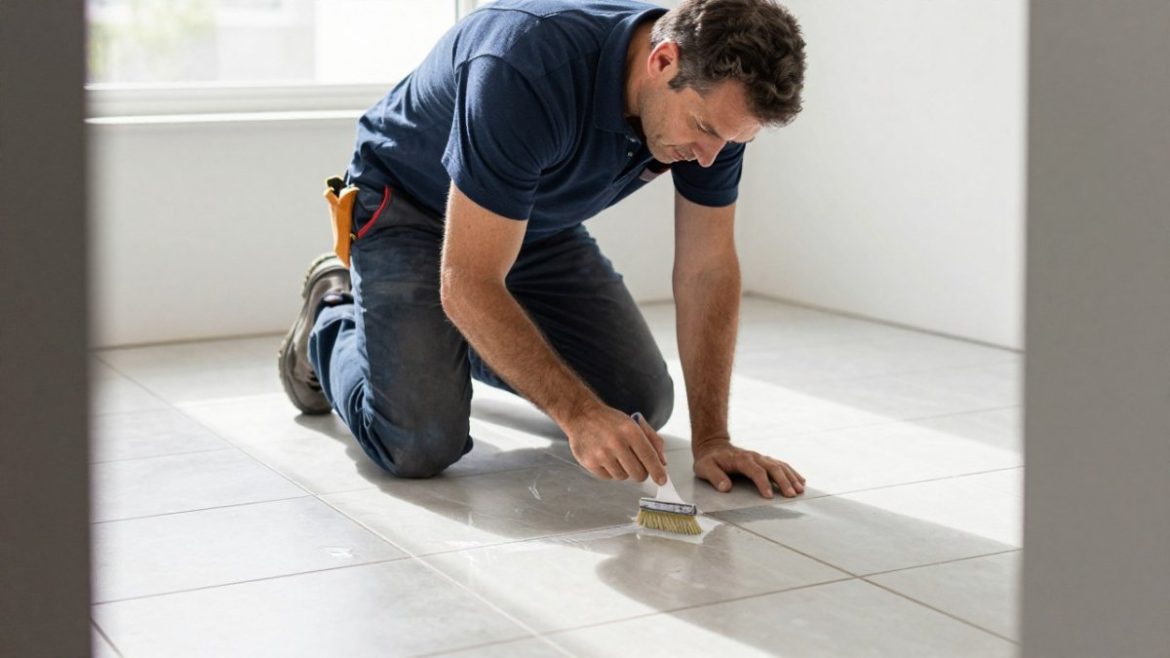
- Apply the sealer with a small foam brush or applicator bottle.
- Work along the grout lines and avoid spreading sealer onto the tile.
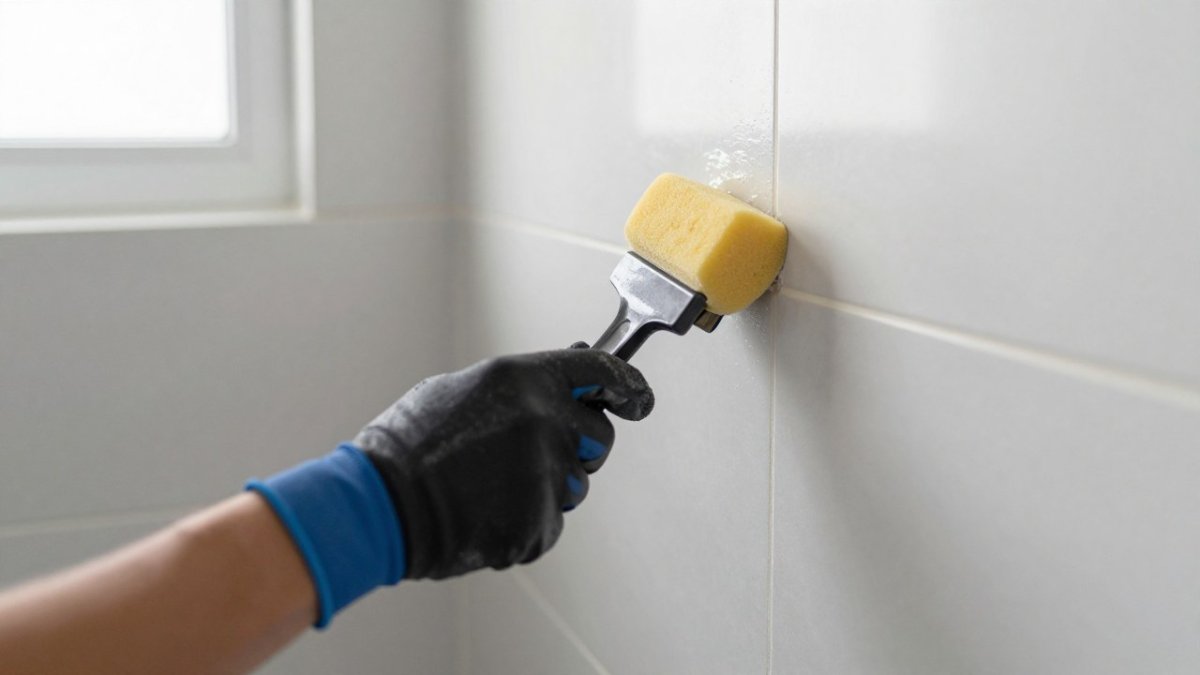
- Wipe any excess off the tile surface right away.
- Let the sealer cure for the time listed on the label, usually a few hours.
- Keep the area dry until the sealer has fully cured.
Watch out: many sealers can leave a haze on tile if you wait too long to wipe them off. Wipe the tile surface promptly with a clean, dry cloth.
How Long Grout Sealer Lasts and When to Reseal
How long a penetrating sealer lasts depends on the product and how much wear the grout gets, so check the product label for guidance.
A simple check tells you when it is time. Drip water on the grout again. If it soaks in quickly instead of beading up, the sealer has worn down and the grout needs a fresh coat.
Clean grout with a pH-neutral cleaner to help the sealer last longer. Harsh acidic cleaners can break down the protection faster.
Myths vs. Facts About Grout Sealer and Stains
Myth: Sealed grout will never stain.
Fact: Sealer slows staining but does not stop it.
Myth: You only need to seal grout once.
Fact: Sealers wear down over time and need periodic reapplication.
Myth: Any sealer works on any grout.
Fact: Compatibility matters. Check the label to confirm the sealer suits your grout and tile.
Myth: A thicker coat gives better protection.
Fact: Applying too much sealer can leave a haze and trap dirt.
Myth: Sealer fixes stained grout.
Fact: Sealer prevents future stains but does not remove existing ones.
Booking a Professional Grout Restoration or Choosing Your Sealer
If your grout is badly stained or discolored, a professional restoration may give better results than sealer alone. A restoration can clean deep stains and match or change the grout color.
Grout Shield Distributors offers grout restoration and coloring products, along with sealers and cleaners for homeowners and contractors. Our range includes over 200 colors with custom color matching. Place an order online or call 1-800-631-0716 to find the right sealer for your grout.
For the best results, match the sealer to your grout type, clean thoroughly before applying, and reseal on a regular schedule.
Frequently Asked Questions
Does grout sealer prevent staining completely?
No. Grout sealer reduces how much liquid the grout absorbs, which slows staining, but it does not make grout stain-proof. Spills such as coffee, oil, or cleaning products can still leave marks if they sit on the surface, especially on unsealed or worn areas. Sealer works best as a barrier that buys time to wipe up spills. Wiping spills promptly is still the most effective step, and sealer simply makes that cleanup easier and more reliable over the life of the grout.
Will grout sealer darken my grout?
Some penetrating sealers can slightly deepen the color of cementitious grout, especially lighter shades, and this change is usually more noticeable when the grout is wet. Many sealers are labeled as non-darkening or color-enhancing, so check the product label before applying. Test the sealer on a small, hidden grout area and let it dry fully before deciding. Darkening is generally a cosmetic effect and does not indicate a problem with the product or the application.
Can you seal grout that is already stained?
Sealer can be applied over grout that is already stained, but it will not remove existing stains. Clean the grout thoroughly first, allow it to dry completely, and then apply sealer to protect against future staining. Deeply set stains, mold, or mildew may require a dedicated grout cleaner or, in severe cases, a grout colorant or restoration product before sealing. Sealing over a stain that has not been cleaned can trap the discoloration beneath the sealer.
What are the disadvantages of sealing grout?
The main drawbacks are that sealer needs periodic reapplication, can leave a slight haze or residue if applied carelessly, and may cause surface changes such as a sheen or darker tone on some grout. Applying sealer incorrectly, such as over dirty or wet grout, can cause poor adhesion or uneven results. Some contractors skip sealing because it adds maintenance, but for most homeowners the added protection and easier cleaning outweigh these downsides when the product is applied correctly.
