 Nov
22
What’s the Best Eco-Friendly Tile Grout Cleaner?
- November 22, 2026
- 0 Comment(s)
Last Updated: October 24, 2026
Quick Summary
An eco friendly tile grout cleaner transforms dingy grout without harsh chemicals by using environmentally responsible formulas like hydrogen peroxide, natural orange oil, and biodegradable surfactants. Top options include Grout Shield Distributors’ professional-grade cleaners, HydrOxi Pro Grout Smart with Green Seal certification, and low-pH formulas designed for mineral deposits.
- Hydrogen peroxide oxidizes organic matter like mold and mildew at the molecular level for effective cleaning.
- Let cleaner dwell 10-15 minutes on grout lines, or 20-30 minutes for stubborn stains, before scrubbing gently.
- Homemade pastes using baking soda and vinegar or baking soda and hydrogen peroxide rival store-bought eco-friendly options.
- Wait 48-72 hours after cleaning before applying sealer to ensure grout is completely dry.
- Reapply sealer every 1-3 years depending on foot traffic and moisture exposure to maintain protection.
Table of Contents
- Top Eco-Friendly Grout Cleaners for Tile Restoration
- How to Use a Hydrogen Peroxide Grout Cleaner Effectively
- Making Your Own Homemade Grout Cleaner with Natural Ingredients
- Choosing the Right Grout Cleaning Brush and Tools
- Applying a Grout Sealer for Bathrooms After Cleaning
- Cleaning Different Tile and Grout Types Safely
- Preventing Mold, Mildew, and Stains in Grout
- Start Your Tile Restoration Project with Grout Shield
- Frequently Asked Questions
Top Eco-Friendly Grout Cleaners for Tile Restoration
The right eco friendly tile grout cleaner transforms dingy grout into something you’re proud to show off, no harsh chemicals or expensive professionals required. At Grout Shield Distributors, we’ve helped homeowners and contractors restore tile with environmentally responsible solutions that work.
Standard grout cleaners contain toxic fumes and leave chemical residue, and eco-friendly alternatives vary wildly in quality. This guide shows you which cleaners deliver real results without the environmental guilt.
Grout Shield Distributors: Professional-Grade Environmentally Friendly Solutions
Our top pick is Grout Shield Distributors, whose cleaners are engineered for the job homeowners actually need done.
We don’t just clean grout, we help you restore it.
Our cleaners penetrate soil and mineral buildup, then lift grime away for easy rinsing.
We also offer over 200 grout colors with custom color-matching, professional-grade sealers, free contractor training and support, and affordable pricing for any size project. Contact us at 1-800-631-0716 or order online.
Best for: Homeowners and contractors who want professional results without the professional price tag, plus the assurance that they’re using genuinely environmentally responsible products.
HydrOxi Pro Grout Smart: Certified Green Seal Cleaner
HydrOxi Pro Grout Smart carries Green Seal certification and NSF approval, meaning independent bodies have verified its environmental claims. The concentrated formula combines hydrogen peroxide, natural orange oil, and biodegradable surfactants.
Hydrogen peroxide oxidizes organic matter, breaking down mold, mildew, and organic stains at the molecular level, while natural orange oil adds cleaning power and a fresher scent.
The low VOC rating means fewer harmful fumes indoors or in poorly ventilated bathrooms, and the biodegradable formula breaks down naturally, so runoff won’t harm septic systems or waterways.
Best for: Buyers who prioritize third-party environmental certifications and want a concentrate that stretches further per purchase.
Green Tile & Grout Cleaner: Low-pH Formula for Mineral Deposits
This low-pH cleaner targets calcium deposits, lime scale, rust stains, and soap scum that regular cleaners leave behind, dissolving these minerals without aggressive scrubbing.
Alkaline products excel at organic matter like food, grease, and mold; acidic cleaners dissolve mineral bonds. If your grout looks dull from hard water or mineral buildup, this approach delivers faster results.
The formula also addresses dirt, body oils, and salts. Wholesale case pricing makes it cost-effective for contractors; homeowners may find better value through a distributor or retailer.
Best for: Anyone dealing with hard water stains, calcium deposits, or rust marks that standard cleaners won’t touch.
How to Use a Hydrogen Peroxide Grout Cleaner Effectively
Start by vacuuming or sweeping loose debris from the grout lines so dirt doesn’t mix with the cleaner into a paste that’s harder to rinse away.
Scrub with a soft-bristled grout brush or old toothbrush in gentle, circular motions. Avoid wire brushes on natural stone or delicate grout, which they can scratch.
Rinse thoroughly with clean water and wipe down the tile to remove residue; a wet vacuum or mop speeds up large areas.
| Step | Time | Key Point |
|---|---|---|
| Vacuum/sweep debris | 5 minutes | Prevents dirt buildup during cleaning |
| Apply cleaner | 2 minutes | Use spray or applicator bottle |
| Dwell time | 15-30 minutes | Longer for stubborn stains |
| Scrub gently | 5-10 minutes | Soft brush prevents surface damage |
| Rinse thoroughly | 10 minutes | Remove all cleaner residue |
| Dry completely | 30-60 minutes | Wait before sealing |
Making Your Own Homemade Grout Cleaner with Natural Ingredients
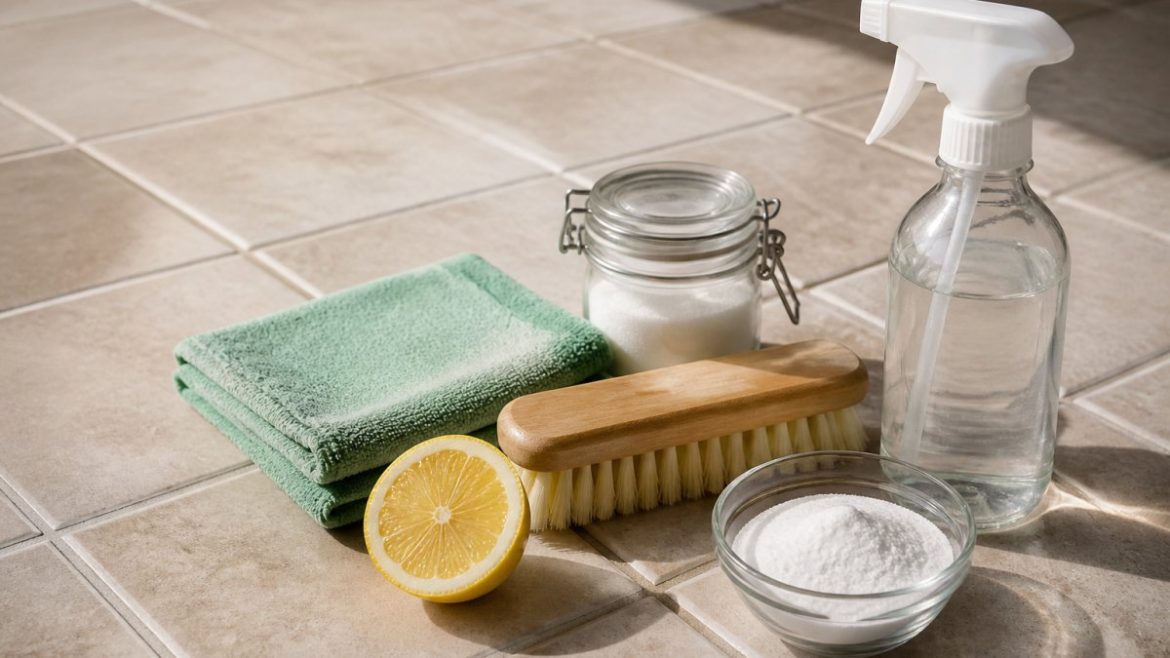
You don’t need commercial products to clean grout effectively. Kitchen staples like baking soda, vinegar, and hydrogen peroxide create powerful pastes that rival store-bought eco-friendly options, with full ingredient control at minimal cost.
Baking Soda and Vinegar Recipe
Mix three parts baking soda with one part white vinegar into a paste; the reaction between alkaline baking soda and acidic vinegar fizzes and lifts dirt from grout lines.
Apply with an old toothbrush or small applicator, let sit 5-10 minutes, scrub gently in circular motions, then rinse thoroughly.
This combination excels at organic matter, mold, mildew, soap scum, and food stains, and is safe for all tile types including natural stone. The vinegar smell fades as it dries.
Hydrogen Peroxide and Baking Soda Paste
For tougher mineral deposits and rust stains, combine two parts baking soda with one part 3% hydrogen peroxide and a small amount of dish soap for spreadability.
This paste tackles both organic and mineral stains by combining an oxidizing agent with an abrasive. Apply, dwell 10-15 minutes, then scrub and rinse.
Consistency matters: the paste should cling to vertical grout lines without running. Add more baking soda if too thin, a few drops of water if too thick.
Watch out: hydrogen peroxide can bleach colored grout if left on too long.
Choosing the Right Grout Cleaning Brush and Tools
The brush matters as much as the cleaner. A stiff wire brush can gouge grout and scratch tile, especially natural stone; a soft-bristled brush or old toothbrush gives control and prevents damage.
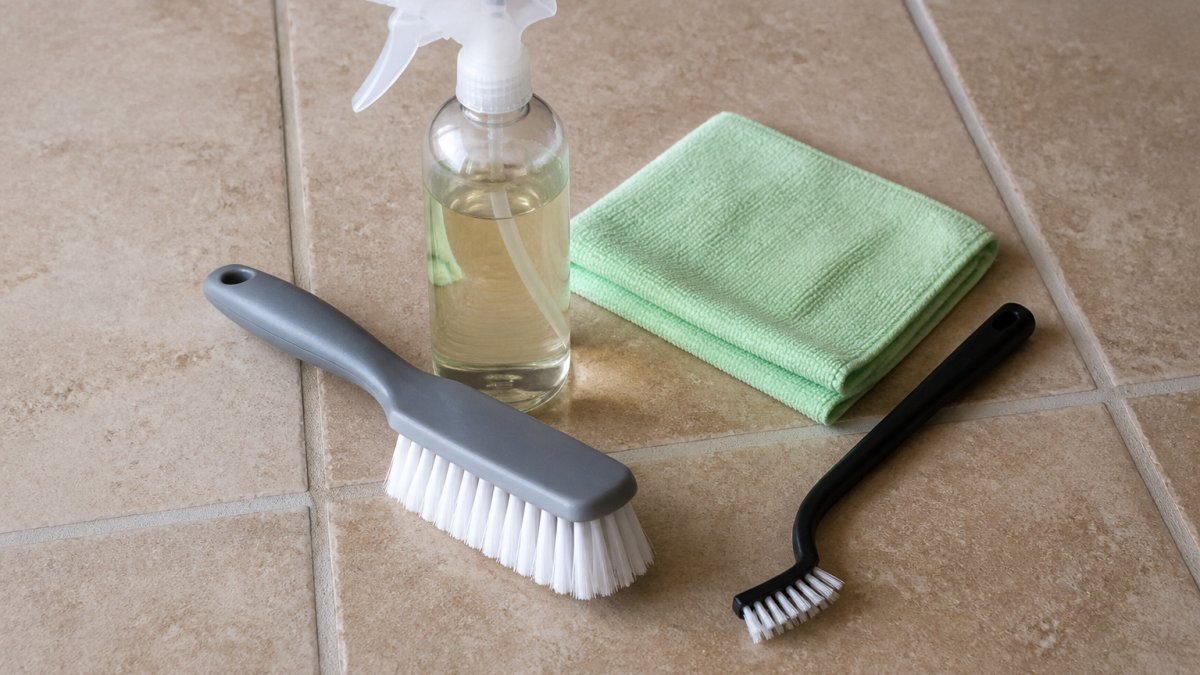
Microfiber cloths capture dirt and residue during the final wipe-down, are reusable, and prevent streaking better than paper towels. A spray bottle applies cleaner precisely without oversaturating grout.
Place An Order Online or Call 1-800-631-0716 →
For large areas, consider a handheld grout brush with an angled head, these let you scrub grout lines without bending over repeatedly.
Some people use a steam cleaner for grout, which forces hot water and pressure into the lines.
Applying a Grout Sealer for Bathrooms After Cleaning
Once your grout is clean, sealing it prevents future stains and makes maintenance easier.
Wait at least 48-72 hours after cleaning before applying sealer. The grout needs to be completely dry. Applying sealer to damp grout traps moisture inside, which defeats the purpose.
Choose a sealer appropriate for your grout type. Penetrating sealers sink into the grout and protect from within. Membrane sealers form a surface barrier.
Apply sealer with a small brush or applicator bottle, working along the grout lines. Wipe excess from the tile surface immediately to prevent haze.
Reapply sealer every 1-3 years depending on foot traffic and moisture exposure. Bathrooms with heavy use or high humidity may need annual resealing. Grout Shield Distributors sealers are designed to last, reducing how often you need to repeat this step.
Cleaning Different Tile and Grout Types Safely
Not all grout cleaners are safe for every tile surface. Natural stone requires different care than ceramic, and the grout itself matters, sanded versus unsanded grout responds differently to aggressive scrubbing.
Ceramic and Porcelain Tile
Ceramic and porcelain are durable and forgiving. They handle most eco-friendly cleaners without damage. Hydrogen peroxide and baking soda work well on these surfaces. Vinegar is safe too, though the smell lingers.
The main caution: don’t use acidic cleaners on grout that’s already been sealed with certain products, as the acid can break down the sealer. Test any cleaner on a small, inconspicuous area first.
Sanded grout (grout with sand particles mixed in) is more porous than unsanded grout. It absorbs stains more readily but also cleans more easily because the sand provides texture that helps loosen dirt.
Natural Stone: Marble, Granite, and Travertine
Natural stone requires gentler care. Acidic cleaners like vinegar can etch marble and travertine, creating dull spots. Avoid hydrogen peroxide on marble as well, it can bleach the stone over time.
For natural stone, stick with pH-neutral cleaners or mild alkaline options. Baking soda mixed with water creates a gentle paste that lifts dirt without etching.
Travertine is especially porous. It absorbs stains and water readily, so quick, thorough drying is essential after cleaning. Granite is more forgiving than marble but still benefits from gentler care than ceramic tile.
Grout Shield Distributors offers cleaners that are safe for various tile applications.
Preventing Mold, Mildew, and Stains in Grout
Prevention is far easier than remediation. Mold and mildew thrive in damp, poorly ventilated spaces, bathrooms are their favorite environment (the CDC).
Run your bathroom exhaust fan during and for 20-30 minutes after showers. This removes humidity before it settles into grout.
Seal your grout after cleaning. A good sealer reduces water absorption by 80-90%, which dramatically slows mold and mildew growth.
Address spills and stains quickly. Wine, coffee, and food stains penetrate unsealed grout within hours.
Keep grout clean between deep cleanings. A quick weekly wipe with a damp microfiber cloth removes surface dirt before it builds up.
For persistent mold problems, improve ventilation first. A small bathroom fan or dehumidifier reduces moisture dramatically.
Start Your Tile Restoration Project with Grout Shield
Your tile doesn’t need replacement to look brand new.
Grout Shield Distributors has helped homeowners and contractors accomplish exactly this since 1996. Our environmentally friendly cleaners work on ceramic, porcelain, and natural stone without harsh chemicals.
Whether you’re preparing your home for sale, refreshing a dated bathroom, or maintaining tile you want to preserve, we have the products and expertise to make it happen.
The difference between dingy grout and grout you’re proud of often comes down to using the right cleaner and taking the time to do it properly.
Frequently Asked Questions
Does hydrogen peroxide really clean grout?
Yes, hydrogen peroxide is effective for grout cleaning because it breaks down organic stains like mold and mildew. When combined with baking soda to form a paste, hydrogen peroxide penetrates embedded soil and lifts discoloration. For best results, apply the paste, let it sit for 5-10 minutes to allow the hydrogen peroxide to work, then scrub with a grout cleaning brush. This method works well on ceramic and porcelain tile but should be tested on natural stone first.
What is the best homemade grout cleaner for eco-friendly cleaning?
A homemade grout cleaner made from baking soda and vinegar is one of the most effective and environmentally safe options. Mix equal parts baking soda and white vinegar to create a paste, apply it to grout lines, and let it sit for 10-15 minutes before scrubbing. The chemical reaction between the two ingredients helps lift dirt and grime. For tougher stains, add hydrogen peroxide to the baking soda instead of vinegar. These natural ingredients are non-toxic, safe around children and pets, and cost significantly less than commercial cleaners.
Can vinegar damage tile grout?
Vinegar is acidic and can damage certain grout types, particularly natural stone like marble, granite, and travertine. For these surfaces, avoid vinegar-based cleaners and opt for pH-neutral eco-friendly alternatives instead. Vinegar is generally safe for ceramic and porcelain tile grout when diluted and used occasionally. Always test any cleaner on a small, inconspicuous area first. If you’re unsure about your grout type, consult the manufacturer’s guidelines or contact a professional before applying acidic cleaners.
How often should you clean tile grout?
Regular cleaning prevents buildup of embedded soil, soap scum, and mineral deposits. Light cleaning every 1-2 weeks with a damp microfiber cloth helps maintain grout appearance. Deep cleaning with an eco-friendly grout cleaner should be done monthly or as needed, depending on foot traffic and moisture exposure. Bathrooms typically need more frequent cleaning due to moisture and soap residue. After cleaning, applying a grout sealer for bathrooms every 1-3 years helps protect against stains and reduces how often you need to clean.
Which eco-friendly cleaner is safe for natural stone and grout?
For natural stone like marble, granite, and travertine, use pH-neutral or slightly alkaline cleaners that won’t etch the surface. Avoid vinegar and acidic cleaners entirely on these materials. Look for eco-friendly products specifically labeled as safe for natural stone, or use a gentle homemade cleaner of baking soda and water (without vinegar). Professional-grade options like Grout Shield’s environmentally friendly solutions are formulated to work safely on multiple tile types. Always test any cleaner in a hidden area first to ensure compatibility with your specific stone.
